What is the Mamaestra?
Retobilinguismo is a research-based, linguistically grounded Spanish curriculum for children from birth to age 9. Developed by Mamaestra and rooted in Applied Linguistics, it offers a developmental path to fluency, combining songs, play, crafts, books, and routines.
This curriculum was designed for:
Early childhood teachers
School directors
Moms, nannies, aupairs
Bilingual caregivers and homes
We believe children can grow with Spanish, not just learn it.
Learning a language early helps children build strong communication skills, understand different cultures, and think more creatively. It’s a simple step that makes a big difference in their future.
Why Our Method Works?
Research in Applied Linguistics shows that:
Children under 6 have heightened neural plasticity for language.
Singing supports memory, pronunciation, and syntax.
Crafting and storytelling activate vocabulary through multisensory learning.
Daily exposure creates emotional connection and long-term retention.
Every resource we offer aligns with these principles.
Mamaestra Curriculum: Levels 1, 2, 3 For Babies, Toddlers, and Preschoolers
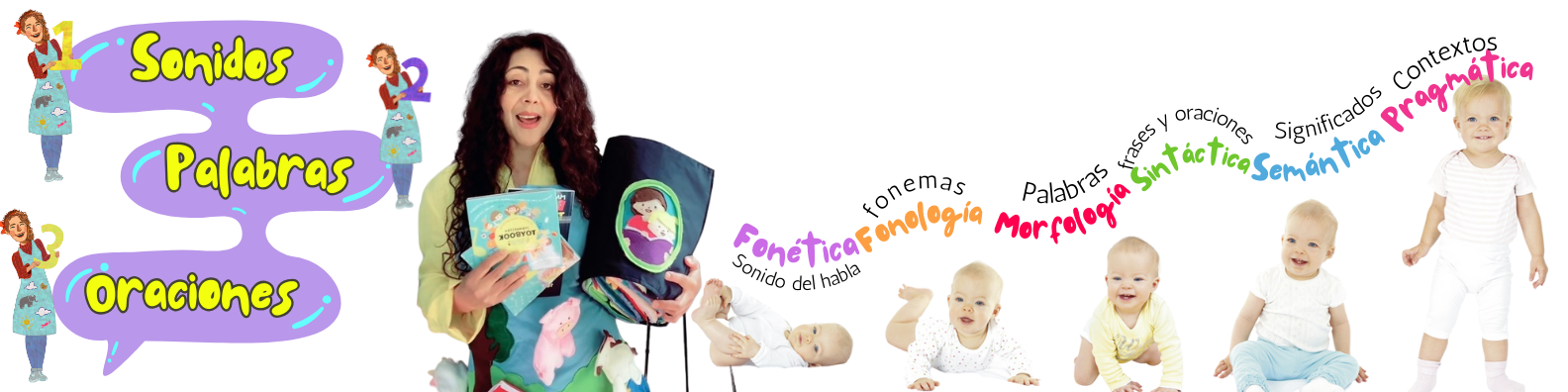
Language development follows predictable neurological stages. That’s why we’ve built three levels to match the brain’s capacity to absorb, interact, and produce Spanish as a second language.
Mamaestra 1 – Your Baby’s First Year in Spanish

What's Inside Mamaestra 1?
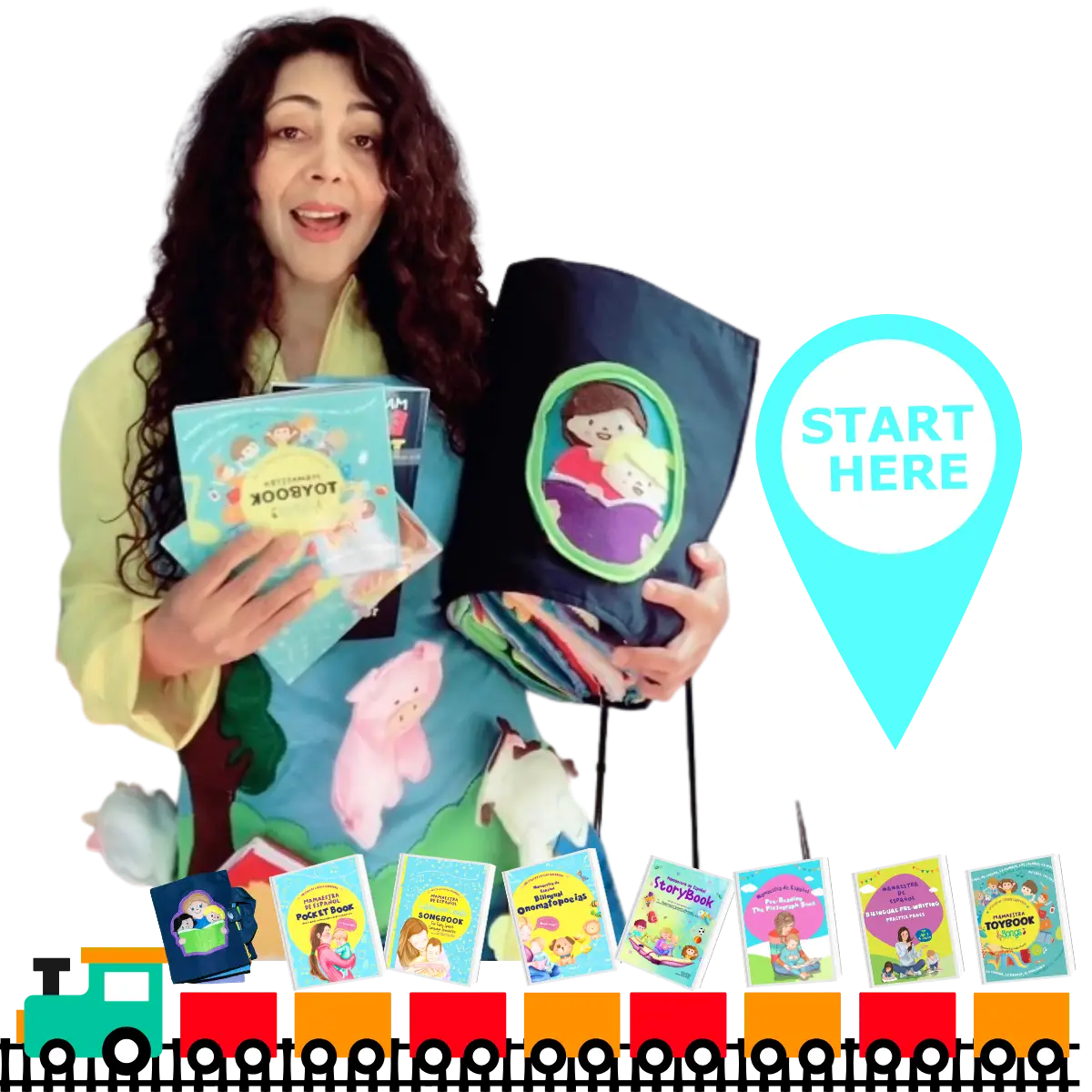
50 Lullabies – One lullaby for each week of your baby’s first year, with soft melodies and onomatopoeia to spark sound awareness.
Pocket Book – Easy-carry guide with lyrics, tips, and activities you can use anywhere.
Toybook with Puppets – Interactive characters to make new words come alive during playtime.
10 Mini-Books – Each one focused on essential vocabulary themes (family, food, animals, colors, etc.).
How to Use It?
Sing the weekly lullaby during bedtime, feeding, or quiet moments.
Use puppets to “speak” new words and act out simple stories.
Read a mini-book together each week and point to the pictures as you name them.
Repeat sounds and onomatopoeia (“moo,” “woof,” “tick-tock”) to strengthen early phonetic skills.
Why It Works?
Music builds your baby’s ear for rhythm and melody — the foundation for language.
Play with puppets creates emotional connection and faster vocabulary retention.
Mini-books reinforce words visually, making them stick.
Consistent weekly rhythm ensures steady, natural language growth.
Level 2 - Toddlers (18 months - 3 years)
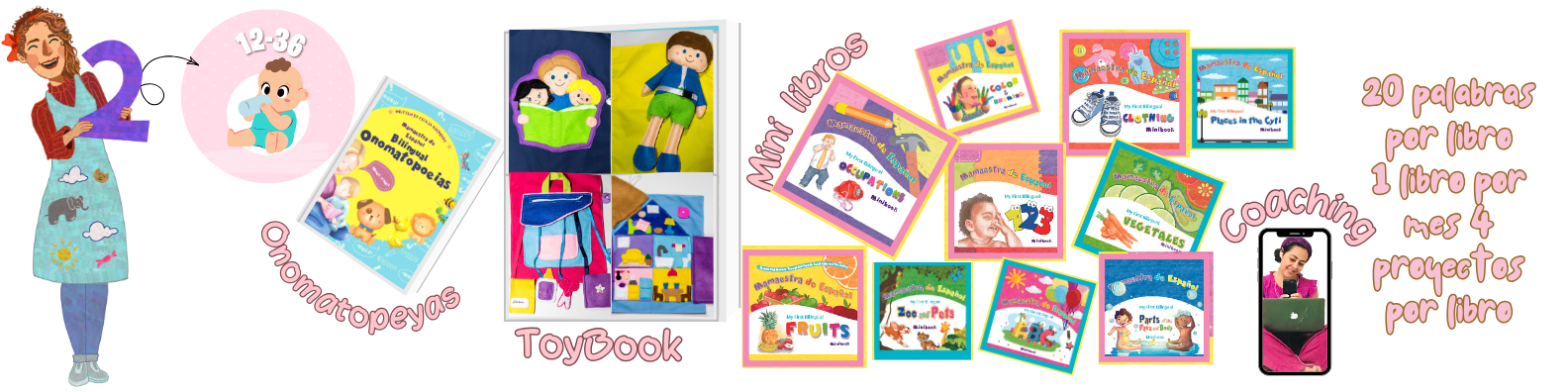
At this stage, children are ready to produce words and grow their vocabulary. Linguistic research shows toddlers learn fastest when language is tied to objects, actions, and music.
What you get and Why it works
At this stage, children are ready to produce words and grow their vocabulary. Linguistic research shows toddlers learn fastest when language is tied to objects, actions, and music.
You will get the Toybook, Songbook, Workbook.
With this material you can work with your Toddlers naturally repeat sounds and words. With play, gestures, and songs, every activity turns into a language-building moment.
Mamaestra 3 = Preschoolers (3-5 years)
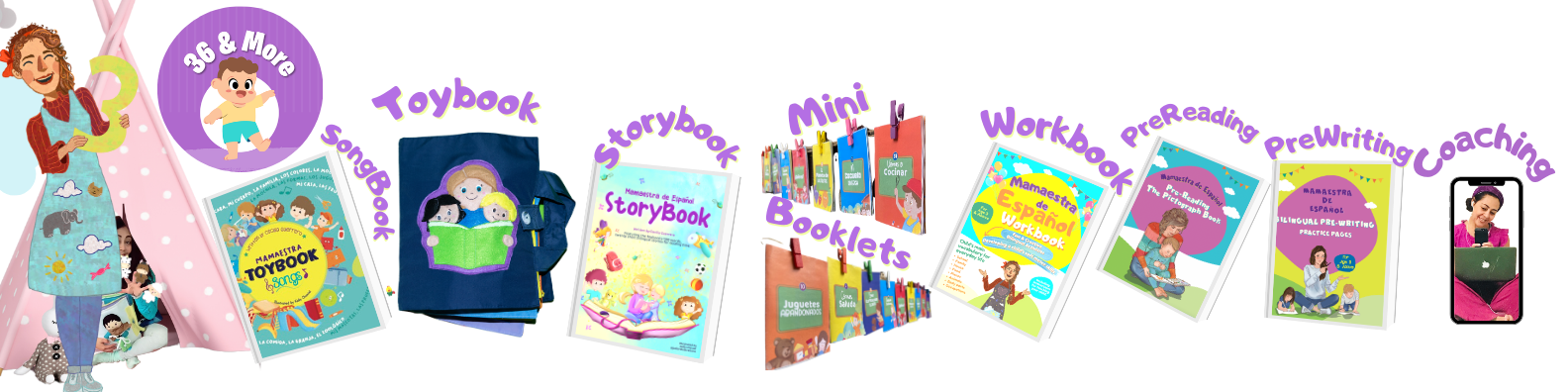
Preschoolers are full of imagination and ready to use language with purpose. At this stage, we focus on intentional production of words and phrases, building pre-reading and pre-writing skills, and expanding creativity through play and storytelling.
What you get and Why it works
- Toybook with 100 finger puppets for richer role-play scenarios.
- Workbook for pre-writing and pre-reading skills, based on linguistic principles.
- 20-Story Storybook linked to the Toybook characters.
- Mini-Booklets – smaller versions of each story for children to play with and revisit.
- Creative Art Projects – complete with all materials included.
- Teepee Play Space – assign a special storytelling corner at home, perfect for role play.
Why it works:
Children at this age are developing symbolic thought and love role-playing. Using familiar characters from the Toybook, we bring stories to life in big and small formats. Art projects deepen understanding and spark creativity, while pre-reading and pre-writing activities prepare them for the next stage of literacy.
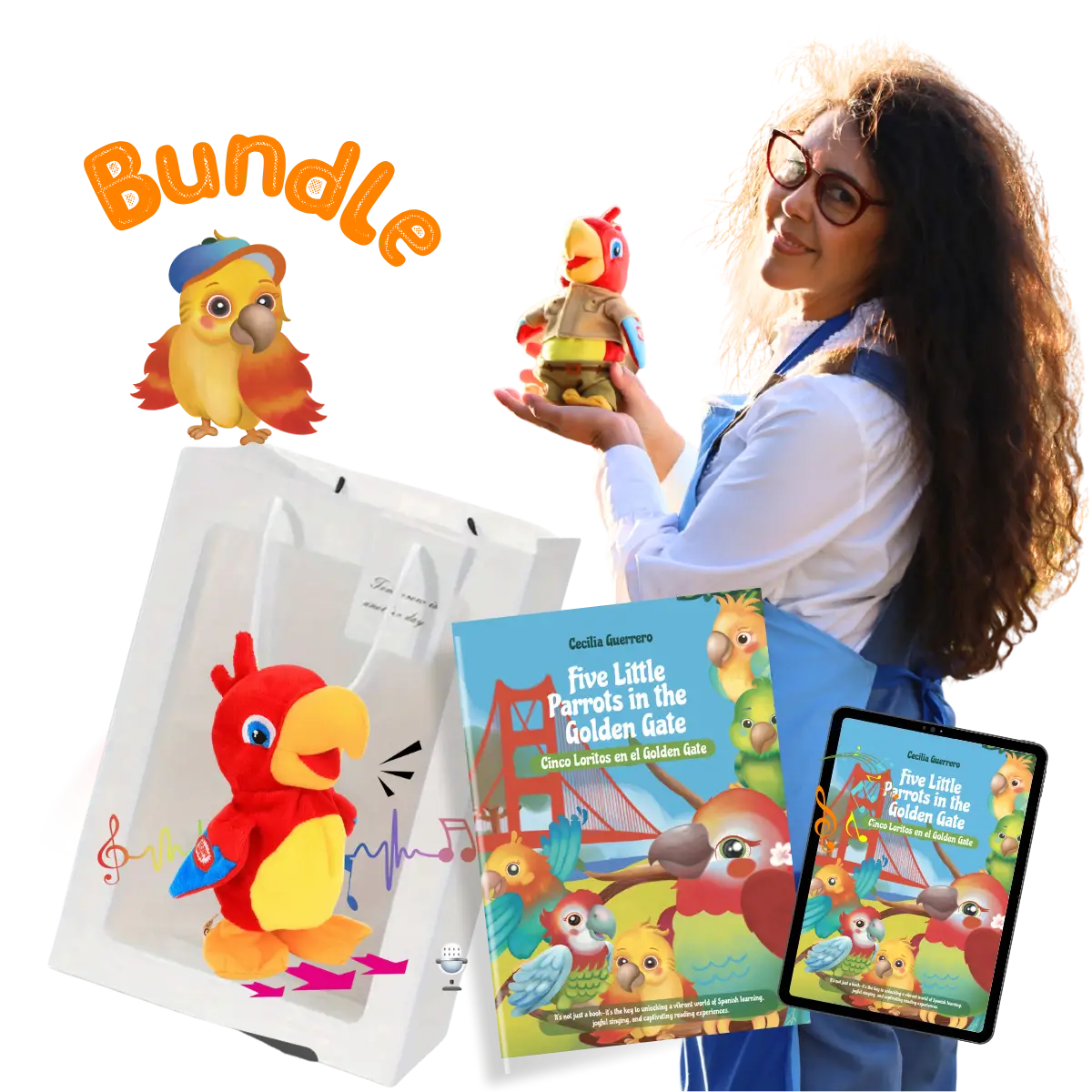
Loritos
Why Our Method Works
A nature-based, project-centered Spanish program for preschoolers. Rooted in storytelling, art, and exploration, this program includes:
10 Thematic Mini Books
Toybook Workbook
Nature-based learning Material
- Loritos Story
- Loritos Music
- Loritos T-shirts
Open-ended inquiry
Kids learn Spanish as they move, create, and imagine.